
Welcome to Trinetram.
Introduction
In the modern world, people constantly search for peace, health, purpose, and emotional balance. Yet stress, attachment, anxiety, and ego-driven living often disconnect humanity from inner harmony. The ancient wisdom of Karma Yoga offers a profound solution — transforming ordinary actions into sacred spiritual practice.
Karma Yoga is the path of selfless action. It teaches us to perform our duties without attachment to outcomes. Every action becomes an offering to the Divine, purifying the mind and aligning the body, emotions, and consciousness toward liberation — Nirvana.
In Karma Yoga, work is not bondage. Attachment is bondage.
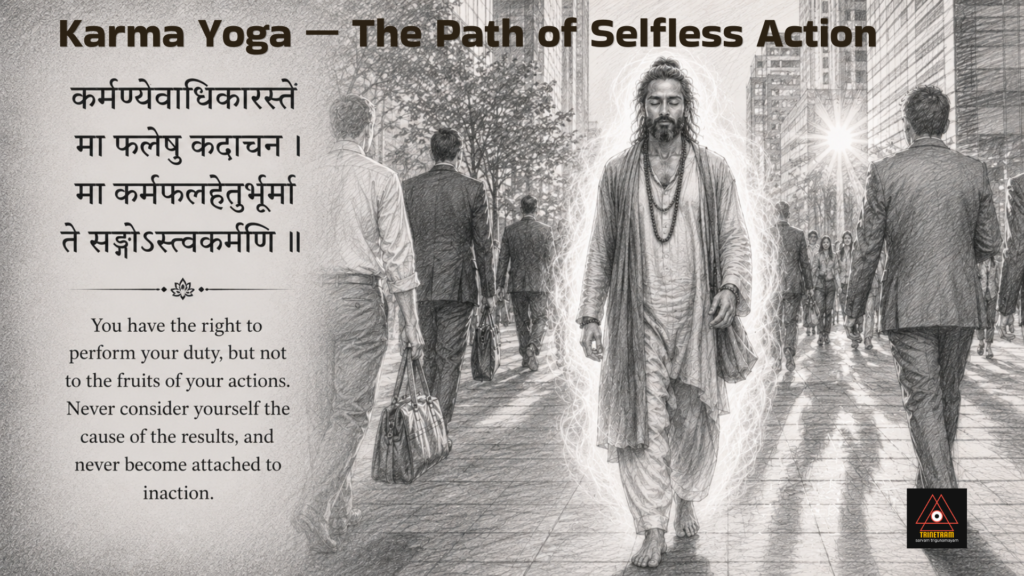
As cited in Bhagavad Gita, कर्मण्येवाधिकारस्ते मा फलेषु कदाचन । मा कर्मफलहेतुर्भूर्मा ते सङ्गोऽस्त्वकर्मणि ॥(Karmanye Vadhikaraste Ma Phaleshu Kadachana)Means “You have the right to perform your duty, but not to the fruits of your actions. Never consider yourself the cause of the results, and never become attached to inaction.”
Insight:
This verse forms the foundation of Karma Yoga. Human beings control only their actions, never the results. Anxiety, disappointment, and stress arise when we become emotionally attached to outcomes. By focusing only on sincere effort, the mind becomes peaceful, efficient, and spiritually balanced.
Phases of Karma Yoga
Karma Yoga unfolds gradually through inner transformation. It is not merely external action, but a purification of consciousness.
1. Action with Ego
Initially, actions arise from personal desire, ambition, fear, or recognition. This creates mental stress and emotional instability.
As cited in Bhagavad Gita, अहंकारविमूढात्मा कर्ताहमिति मन्यते ॥(Ahamkara Vimudhatma Kartaham Iti Manyate) Means “The deluded self, influenced by ego, thinks ‘I am the doer.’”
Insight:
The ego creates the illusion that “I alone am the doer.” Karma Yoga dissolves this false identity. Actions arise through countless forces — nature, society, body, mind, and divine order. Understanding this reduces arrogance and cultivates humility.

2. Conscious Action
The practitioner becomes aware of intentions and begins acting ethically, mindfully, and compassionately.
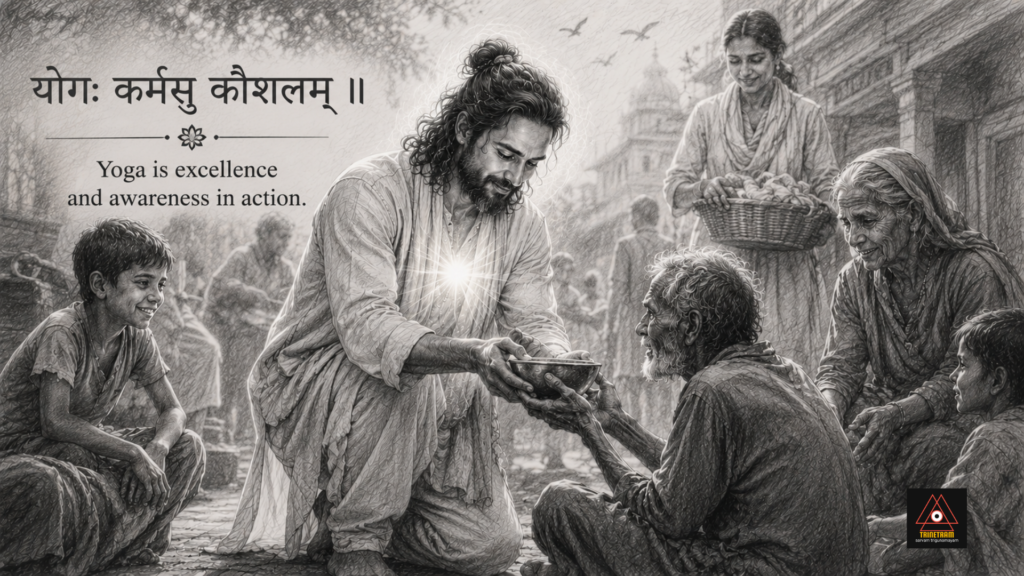
As cited in Bhagavad Gita, योगः कर्मसु कौशलम् ॥(Yogah Karmasu Kaushalam) Means “Yoga is excellence and awareness in action.”
Insight:
Yoga is not merely meditation or physical posture; it is excellence and awareness in every action. When work is performed mindfully, skillfully, and without mental disturbance, ordinary activity becomes spiritual practice.
3. Selfless Service
Actions are performed as service to humanity and the Divine without expectation of reward.
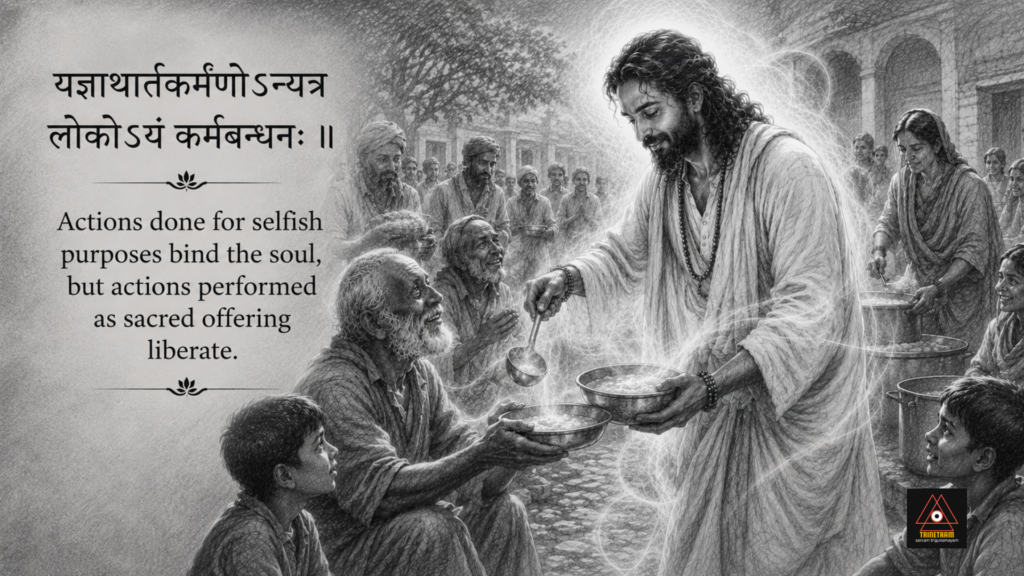
As cited in Bhagavad Gita, यज्ञार्थात्कर्मणोऽन्यत्र लोकोऽयं कर्मबन्धनः ॥(Yajnarthat Karmano’nyatra Loko’yam Karma Bandhanah) Means “Actions done for selfish purposes bind the soul, but actions performed as sacred offering liberate.”
Insight:
Selfish action creates bondage, while sacred action liberates. The verse teaches that life becomes spiritually meaningful when actions are performed as offerings to the Divine or for the welfare of humanity rather than personal gain alone.
4. Surrender and Liberation
The final stage dissolves ego completely. Actions continue naturally, but the sense of “I” disappears. This becomes spiritual freedom.
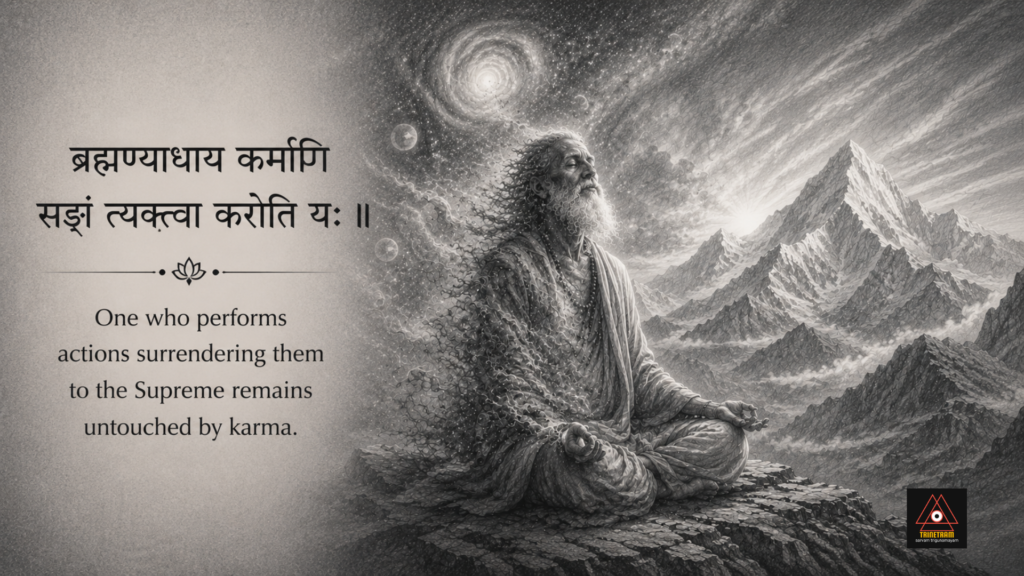
As cited in Bhagavad Gita, ब्रह्मण्याधाय कर्माणि सङ्गं त्यक्त्वा करोति यः ॥(Brahmanyadhaya Karmani Sangam Tyaktva Karoti Yah) Means “One who performs actions surrendering them to the Supreme remains untouched by karma.”
Insight:
One who surrenders actions to the Supreme remains untouched by karma. This does not mean avoiding responsibility; rather, it means acting fully while internally detached. Such surrender creates inner freedom even amidst intense worldly activity.
How to Practice Karma Yoga
Practicing Karma Yoga does not require renouncing family or career. It transforms everyday life into spiritual discipline.
1. Perform Duties Mindfully
Whether cooking, working, parenting, or serving society — act with full awareness.
As cited in Bhagavad Gita, मनः प्रसादः सौम्यत्वं मौनमात्मविनिग्रहः ॥ (Manah Prasadah Saumyatvam Maunam Atma Vinigrahah) Means “Peacefulness of mind, gentleness, silence, and self-control are spiritual disciplines.”
Insight:
True spirituality reflects in mental calmness, gentleness, silence, and self-control. Karma Yoga is not only external service but also internal discipline. Emotional regulation and peaceful thinking directly influence physical health and spiritual clarity.

2. Release Attachment to Results
Do your best, but surrender expectations.
As cited in Bhagavad Gita, त्यक्त्वा कर्मफलासङ्गं नित्यतृप्तो निराश्रयः ॥(Tyaktva Karma Phala Sangam Nitya Trupto Nirashrayah) Means “One who abandons attachment to results remains ever content and independent.”
Insight:
Contentment arises when dependence on external success disappears. A Karma Yogi acts sincerely yet remains inwardly fulfilled regardless of praise or criticism. This emotional independence creates resilience and lasting peace.

3. Serve Others Compassionately
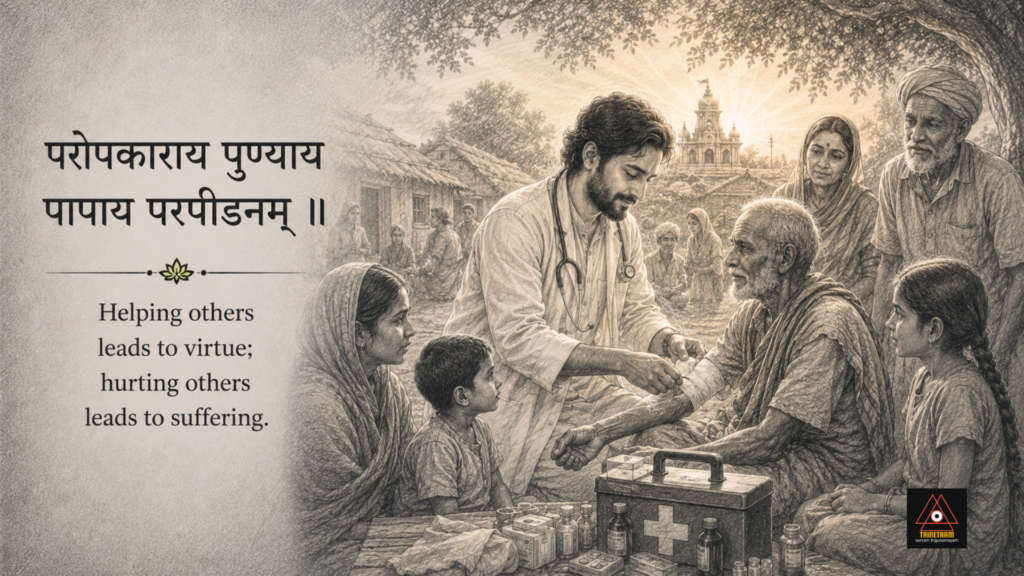
Helping others purifies the heart and reduces selfishness.
As cited in Traditional Sanskrit Subhashita, परोपकाराय पुण्याय पापाय परपीडनम् ॥(Paropakārāya Puṇyāya Pāpāya Para Pīḍanam) Means “Helping others leads to virtue; hurting others leads to suffering.”
Insight:
Helping others purifies consciousness, while harming others darkens the mind. Karma Yoga emphasizes compassionate action because selfless service gradually dissolves selfishness and awakens universal love.
4. Practice Daily Inner Reflection
Observe motives, emotions, and reactions.
As cited in Bhagavad Gita, उद्धरेदात्मनात्मानं नात्मानमवसादयेत् ॥(Uddhared Atmanatmanam Natmanam Avasadayet) Means “One must elevate oneself through one’s own mind and never degrade oneself.”
Insight:
Self-transformation begins within. No external force can permanently elevate a person without inner effort. Karma Yoga encourages self-awareness, discipline, and responsibility for one’s own mental and spiritual evolution.

Benefits of Karma Yoga
Karma Yoga benefits physical health, emotional well-being, and spiritual growth.
Mental Benefits
- Reduces stress and anxiety
- Removes overthinking
- Increases emotional stability
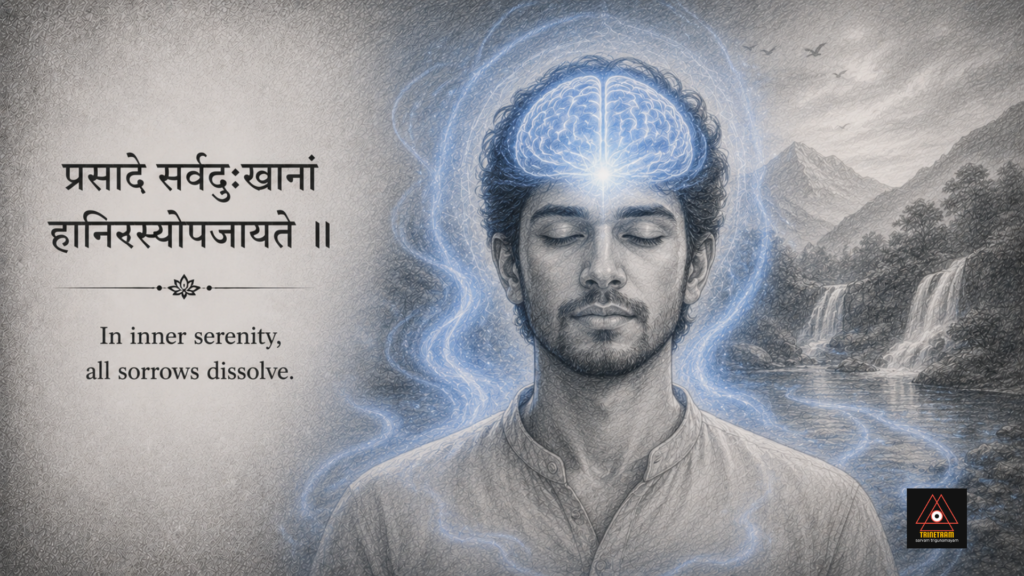
As cited in Bhagavad Gita, प्रसादे सर्वदुःखानां हानिरस्योपजायते ॥(Prasade Sarva Dukhanam Hanirasyopajayate) Means “In inner serenity, all sorrows dissolve.”
Insight:
Inner serenity heals suffering. Most pain originates not from situations themselves but from mental agitation and resistance. Calmness of mind creates clarity, emotional healing, and spiritual strength.
Physical Benefits
- Promotes healthier lifestyle habits
- Reduces psychosomatic illness
- Improves sleep and hormonal balance
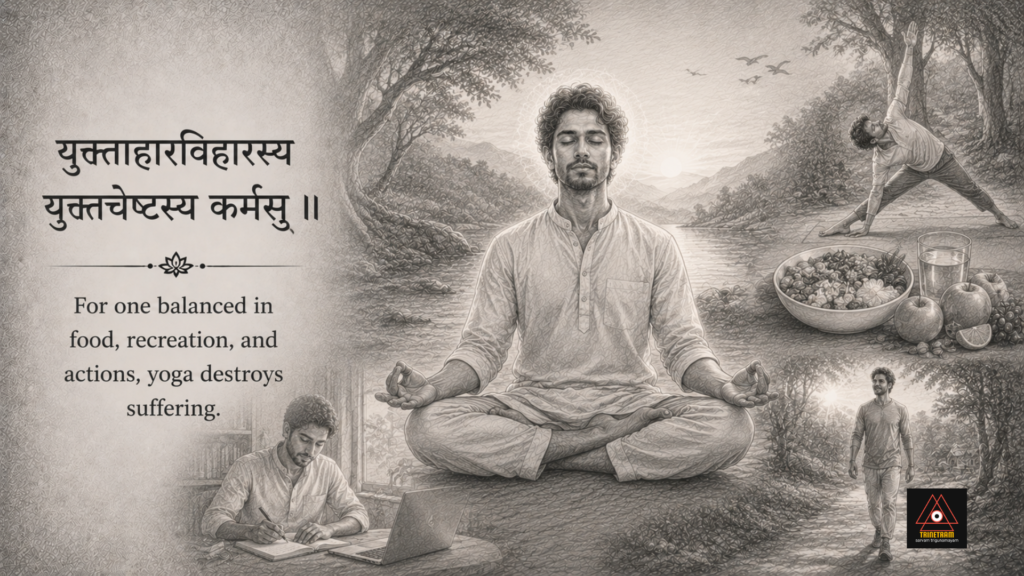
As cited in Bhagavad Gita, युक्ताहारविहारस्य युक्तचेष्टस्य कर्मसु ॥(Yuktahara Viharasya Yukta Cheshtasya Karmasu) Means “For one balanced in food, recreation, and actions, yoga destroys suffering.”
Insight:
Spirituality requires balance. Proper food, sleep, recreation, and disciplined action create harmony between body and mind. Karma Yoga is not extreme renunciation but intelligent moderation.
Spiritual Benefits
- Purifies ego
- Opens compassion and devotion
- Leads toward Nirvana
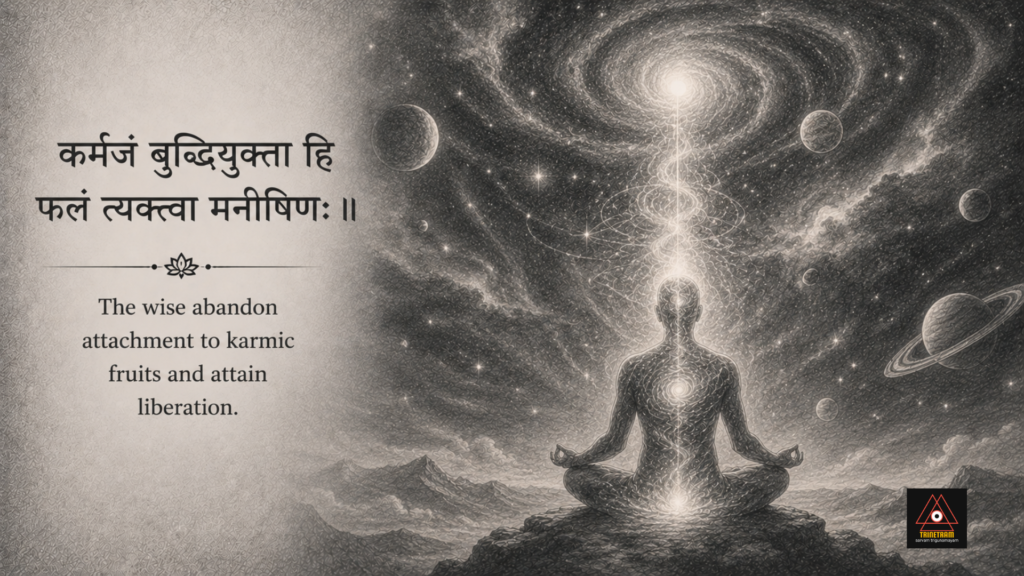
As cited in Bhagavad Gita, कर्मजं बुद्धियुक्ता हि फलं त्यक्त्वा मनीषिणः ॥(Karmajam Buddhiyukta Hi Phalam Tyaktva Manishinah) Means “The wise abandon attachment to karmic fruits and attain liberation.”
Insight:
Wise individuals renounce attachment to the fruits of action and thereby transcend karmic bondage. Freedom comes not from abandoning work, but from abandoning possessiveness toward outcomes.
Misconceptions and Myths
Myth 1: Karma Yoga Means Passive Living
Karma Yoga does not mean avoiding responsibility. It means acting fully without emotional bondage.
As cited in Bhagavad Gita, न हि कश्चित्क्षणमपि जातु तिष्ठत्यकर्मकृत् ॥(Na Hi Kashchit Kshanamapi Jatu Tishthatyakarmakrit) Means “No one can remain without action even for a moment.”
Insight:
Action is unavoidable. Even thinking, breathing, and existing are forms of action. Since life itself is action, Karma Yoga teaches how to act consciously rather than trying to escape responsibility.

Myth 2: Karma Yoga Is Only for Monks
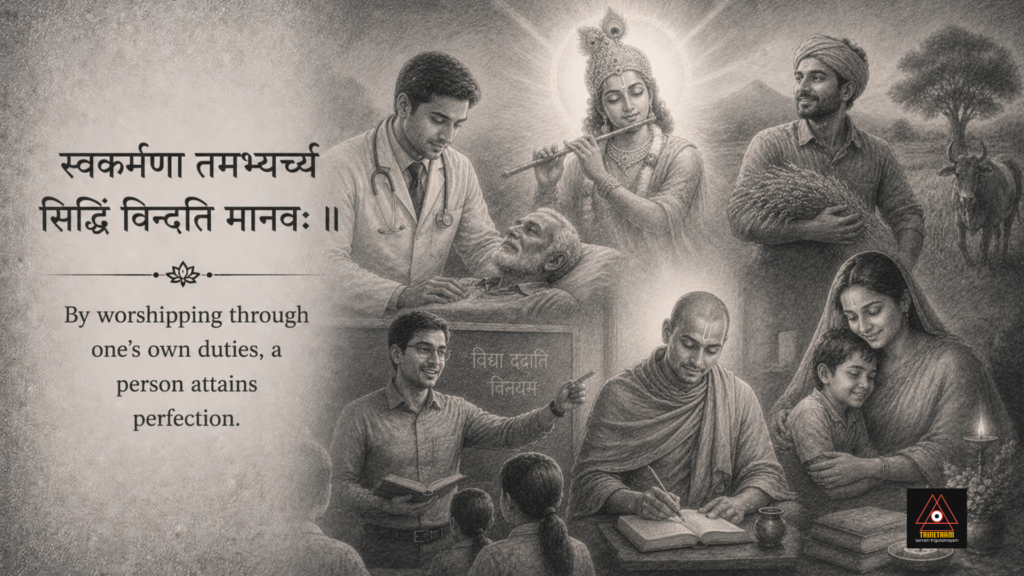
Karma Yoga is meant for everyone — workers, parents, doctors, teachers, leaders, and ordinary people.
As cited in Bhagavad Gita, स्वकर्मणा तमभ्यर्च्य सिद्धिं विन्दति मानवः ॥(Svakarmana Tamabhyarchya Siddhim Vindati Manavah) Means “By worshipping through one’s own duties, a person attains perfection.”
Insight:
Every profession and duty can become worship when performed sincerely. A doctor, teacher, farmer, parent, or worker can attain spiritual perfection through dedicated selfless action.
Myth 3: Selfless Action Gives No Personal Benefit
Paradoxically, true selfless action creates the deepest inner fulfillment and peace.
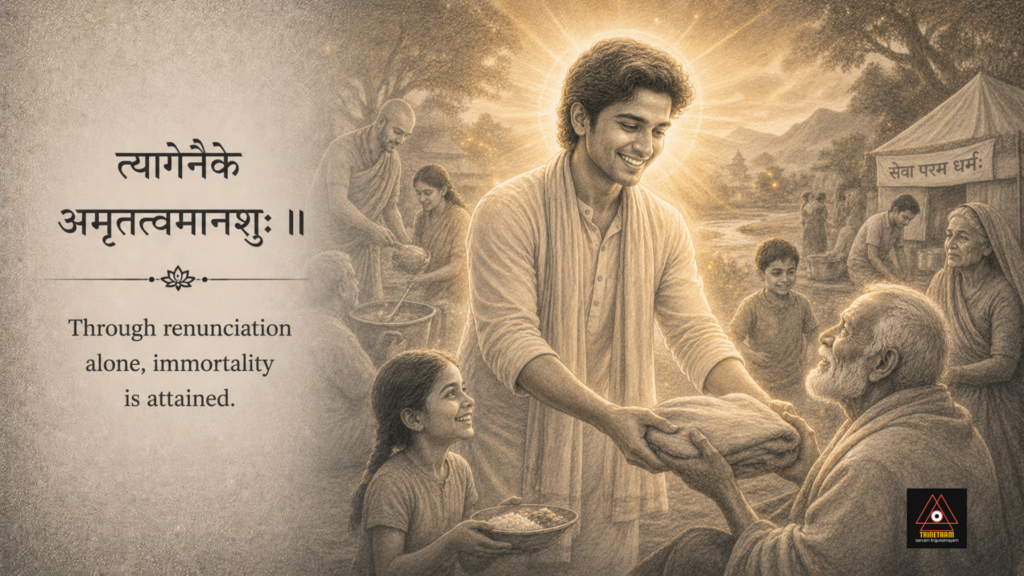
As cited in Kaivalya Upanishad, त्यागेनैके अमृतत्वमानशुः ॥(Tyagenaike Amritatvam Anashuh) Means “Through renunciation alone, immortality is attained.”
Insight:
True immortality is attained through renunciation — not merely of possessions, but of ego, attachment, greed, and selfish identity. Inner freedom begins when clinging ends.
Conclusion
Karma Yoga transforms life itself into meditation. Every responsibility becomes sacred. Every action becomes prayer. The path does not demand escape from the world — it teaches transcendence within the world.
When action becomes free from ego, attachment, and selfish desire, inner harmony emerges naturally. Health improves, emotions stabilize, and consciousness expands toward liberation.
Nirvana is not somewhere else. It begins in the purity of every selfless action.
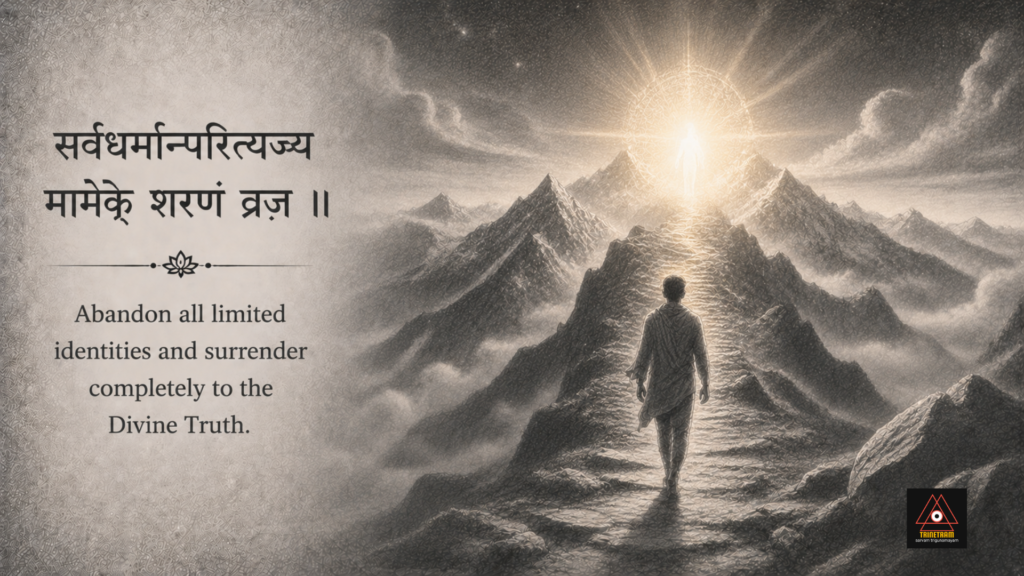
As cited in Bhagavad Gita, सर्वधर्मान्परित्यज्य मामेकं शरणं व्रज ॥(Sarva Dharman Parityajya Mamekam Sharanam Vraja) Means “Abandon all limited identities and surrender completely to the Divine Truth.”
Insight:
The final teaching of surrender represents the highest state of Karma Yoga. When all ego-based identities dissolve, the individual aligns completely with universal consciousness. This surrender leads to liberation, peace, and Nirvana.
We will explore Jnana Yoga – The Path of Knowledge in our upcoming blog. Until then, stay tuned to trinetramyc.com! 🌈
We would love to hear your valuable thoughts and insights to help us deepen this exploration.
Thank you,
Team Trinetram 🙏
Leave a Reply